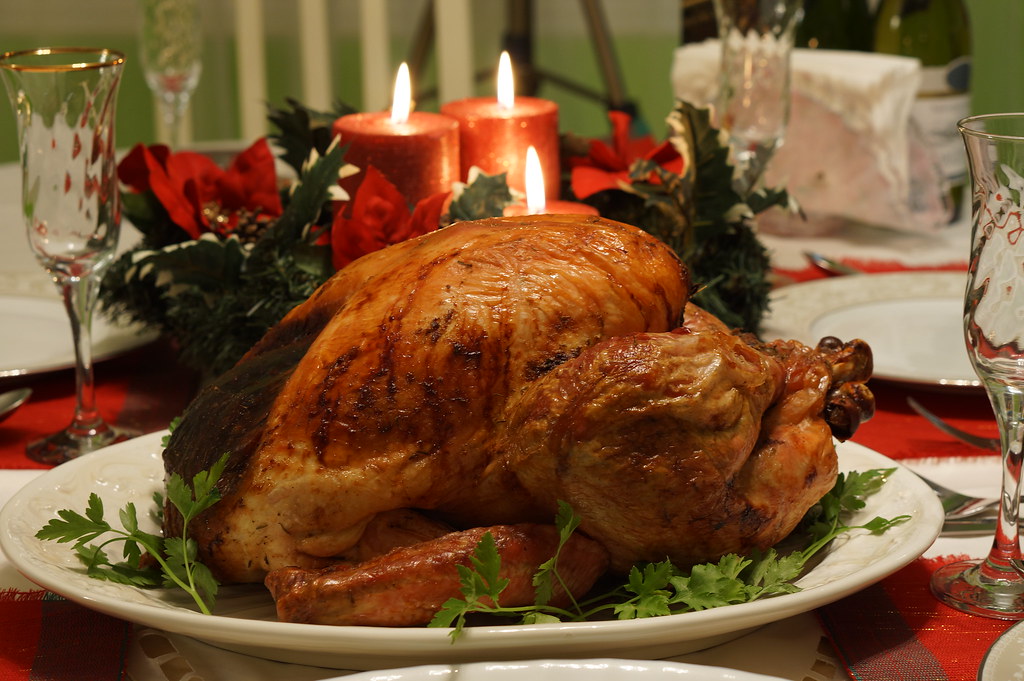
GOBBLE GOBBLE- Thanksgiving meals are looking different these days./Flickr
How Immigrants Celebrate Thanksgiving In Their Own Ways
By Sebastian Tuinder
There is a brief moment after Halloween’s decorations are taking down, and before Mariah Carey’s “All I Want for Christmas is You” begins its outright domination of the airwaves, where another holiday shines: the all-American holiday of Thanksgiving.
November 28 marks this year’s gobbly good celebration of the first harvest feast shared between English Pilgrims and members of the Wampanoag Native Americans in 1621. The Wampanoags were critical in the Pilgrim’s survival of the 1620 winter as they offered assistance in hunting, fishing, and the cultivation of grains. This shared feast marked the beginning of a 50 year alliance between the Pilgrims and the Native Americans, and stands as possibly the only example of harmony between Native Americans and Europeans.
According to History, it was in 1863, during the Civil War, when President Abraham Lincoln suggested that the feast of Thanksgiving be celebrated every November.
Thanksgiving today is traditionally celebrated with friends and family, and usually involves a feast of turkey, sweet potato pie, cranberry sauce, and many more delicious season appropriate dishes.
It is 2019, however, and so Thanksgiving has evolved for some into something much less traditional.
“I hardly eat any meat throughout the year. And Thanksgiving is no exception,” said Christina Salerno, a Brooklyn-based attorney. “I would way rather prefer more veggies and potatoes.”
“This year it’s going to be three of us celebrating Thanksgiving in my apartment, but we’re only going to make traditional Jamaican dishes,” said Shanel Thompson, a Jamaican-born senior at Brooklyn College. “We don’t celebrate Thanksgiving in Jamaica,” said Thompson, adding that it is more an opportunity to be together with loved ones, while remembering all that there is to be thankful for.
Brooklyn, being as diverse as it is, is home to people of various origins, religions, and diets. According to the World Population Review, 38% of Brooklyn’s residents are foreign born. Thanksgiving, therefore, has little to no relevance in some households.
Amina Usnan, a senior at Brooklyn College, said that her Nigerian background means that Thanksgiving is celebrated differently in her home. “There is very little that is traditional during our Thanksgiving,” said Usnan. “It’s more like just an excuse for our whole family to get together and spend time with each other.”
Thanksgiving, being as old a tradition as it is, has been subjected to centuries of social evolution as well as commercialization. Black Friday, the day after Thanksgiving, is synonymous with aggressive shoppers, and massive sales world wide.
Felicia Biggs, a senior at Brooklyn College, and a 2nd generation American, said that in the past she has tried to make the most of the shopping phenomenon by browsing in-store sales early on Black Friday mornings. Biggs also said that she does not particularly value Thanksgiving for anything other than an occasion to be with family, and an excuse to “spend the day in [her] sweats.”
Whether it is the deals, the turkey legs, or just the excuse for families to come together in celebration, Thanksgiving remains firmly rooted in the lives of Americans, and offers each of its celebrators something unique.