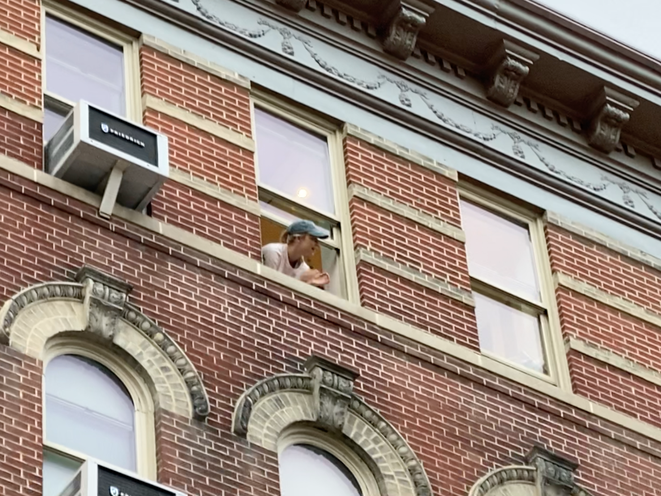
WE CARE - New Yorkers show their support for essential workers during pandemic./Gothamist
#ClapBecauseWeCare Ritual Unites New Yorkers Amid Pandemic
By Irma Cadiz
Every night at 7 p.m., New Yorkers from all five boroughs step out onto their porches, balconies, stoops and fire escapes in order to bang their pots and pans, blow their whistles, sound trumpets or simply clap their hands. If you happen to be in Spanish Harlem, you might hear the occasional cowbell or claves. Those who don’t have balconies scream from their windows, and people walking by stop to acknowledge the cheers and participate.
From time to time, you’ll hear the occasional disgruntled New Yorker, hurling obscenities and bellowing at everyone to pipe down. As everyone in the world stays home to prevent the spread of COVID-19, people show their appreciation of all the essential workers who can’t stay home through a new ritual called #ClapBecauseWeCare.
The ritual began in Wuhan, China back in mid-January, according to the Washington Post. As the virus and quarantine rules spread throughout the world, more nations caught on to the trend. Places in Italy took it a step further and began to sing and play instruments on their balconies.
In New York, the nonprofit group Peace of Heart Choir adapted that model and started a weekly singalong. Every Thursday, they call out to New Yorkers to sing a song at 7 p.m. picked by the choir. This past week, the song choice was Bill Withers’ “Lean On Me.”
Following the trend of New York spirit, on occasion you will hear a car pass by blasting “Empire State of Mind” by Jay Z and Alicia Keys, the beloved rap ballad to the city dubbed by GQ as “New York City’s greatest anthem.” No matter the form, these rituals have served to unite New Yorkers and people around the world during this time of uncertainty.
Rituals, even small ones, can be extremely effective at alleviating grief, reducing anxiety and increasing confidence, according to research. In an article from Scientific American titled “Why Rituals Work,” rituals are described as “symbolic behaviors we perform before, during, and after meaningful events”.
During times of tragic death or loss, studies found that people who engaged in rituals reported feeling less grief. Examples of these rituals included playing songs in memory of a deceased loved one, or burning old pictures in order to overcome grief.
Culture is defined in part by its rituals, which can create a sense of belonging. Rituals are practiced in tribal ceremonies, religious services, sorority and fraternity initiations, weddings, and in reciting the pledge of allegiance or the singing of the national anthem before sporting events. Rituals help us create identity. Through ritual we build families and community, and mark important events in our lives.
To participate in future singalongs, head to New York Sings Along on Facebook, or tune into WBAI 99.5 or WKCR 89.9 FM at 7:02pm to help you synchronize with everyone. You can also poke your head outside your window at 7pm, and join in on the applause in your pajamas, or you can simply take it all in.